Hand Sewing · Upcycling

Elysian Fields

Elysian relates to a heaven or paradise, I found these little fields of heaven in my local area next to the Skate Park!

I wanted to take a picture of these fantastic wild poppy areas for sometime but the weather has always been either raining or too windy. I am planning on using the photos  as inspiration for some floral impressionistic embroidery.

I experimented with an old bookmark I had made previously rather then use up some unused fabrics.


WP_20160719_13_46_48_Pro
Trudi Price 2016

I  managed to find some scraps left from old evening dresses that I had made sometime ago,the pink silk has the same vibrancy as the poppies. For the stems I used back stitch but did the back stitch on the wrong side so the stems look more natural and unkempt on the front.

I am pretty pleased with the results so I am going to have a go on some larger pieces of fabric.


All images are subject to copyright, if you wish to reuse an image please contact me first or credit me as part of the useage.

Hand Sewing · Upcycling

New Balls Please!

I had planned to put up a tutorial this week about a fabric cutlery holder I was making but I had one eye on Wimbledon and realised I was half way through before I had taken photos of the method used!

Well, I thought I would do a little post anyway and save the method for another time.

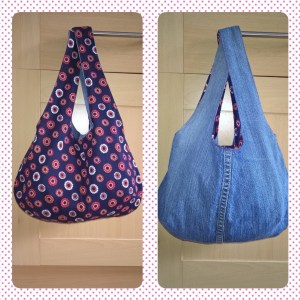
InstagramCapture_a8b0e7a2-f804-4445-9691-1da717930246After I made this bag for myself I had the pieces of fabric left over from the centre of the handles, they weren’t very wide but I like to keep a lot of even fairly small scraps as they can come in handy.

Also, I had been to a restaurant a while a go and kept the little paper holder for the knife and fork, thinking that I might find some use for it.


FB_20160708_17_10_30_Saved_PictureI came up with a little pattern to make my own version and I wanted the edge of the opening to be bound.  Even though I can sew pretty well, I really hate applying Bias binding so I decided to extend the edge of the lining and fold it down I did this first so the edges would be stitched underneath.

Also, I hand appliqued the small circles to the front before stitching all of the pieces together.

I used the bagging out method to stitch the pieces together, by trapping the front pocket pieces between the lining and the outer leaving a small unstitched gap to turn the whole piece through to the right side.

WP_20160706_21_03_20_ProI have made just the one here but if you are going to make e.g a set of two or more then run your sewing like a factory line, cut all the pieces out, stitch all the bindings down, sew the back and front halves together, sew round each holder, turn each one through, then stitch up the gap on each one.


Appropriately, I learned a lot about factory methods when I worked as a pattern cutting assistant for a small factory, which at the time made shorts for the Wimbledon ballboys/girls!

Excuse the different framing on the photos I had been messing around with a bit of editing on a phone app and realised that I had deleted my originals.


Festival Fashion · Hand Sewing · Upcycling

Thrifty Festival Accessories

For several years now festivals have become quite a big pull for people all over the world.  We probably have one of the most famous ones here in England, the Glastonbury Festival.

I went to Phototastic-24_06_2016_7ff305bb-792d-47cf-bcd4-0331b37769daHow The Light Gets In Festival in May, it was rain free! I went to Glastonbury last year for 5 days and got away with one heavy shower of rain! Pretty Lucky huh?

The popularity of festivals has kept an indie bohemian style to the forefront of summer fashion.

As I seem to have a box full of earthy colour scraps and beads, I thought I would put together a few funky tassels and accessories that are festival inspired.

There are loads of tutorials on Pinterest, so instead of putting together a tutorial I have put together a short list of the ones that inspired me.

http://missrenaissance.com/2013/04/01/6697/  – Tassel Inspiration

http://rachaelgreenland.co.uk/felt-balls-tutorial-update/ – A Felt Ball tutorial, its a great tutorial with really loud garden birds in the background!

http://howtodosomething.blogspot.co.uk/2010/01/how-to-make-feather-earrings.html – These earrings inspired the feather necklace pendants.

I like picking up seashells that have become worn and almost skeletal, the shells have natural holes that make threading easy, like the one on the orange thread tassel.

Apart from the roving I bought to try out the felt balls, I didn’t particulary use any specialist tools. The keyring parts are from broken old ones, the beads from old necklaces, I used an awl to make the holes in the leather but they are easily available from DIY stores.

Have a go, if you haven’t got any leather you can get some great effects in other fabrics.

Hand Sewing · Upcycling

Pins and Needles – The Appliqued Needlecase.

Well, its been two months since I last wrote anything on my blog.  I have had a bit of blog apathy as sometimes I feel writing/uploading to a blog can be time consuming and I wanted to try out lots of  different ideas.

Recently, I decided that I needed to make myself a new needlecase. After I uploaded the picture to insta I thought that it might make a good tutorial – so here are the instructions. If you make one let me know and post a picture!

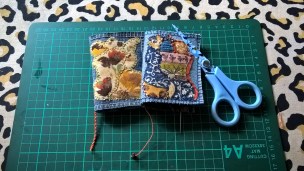
WP_20160615_12_50_53_ProThis is the look that we are going for, a denim cover with a blanket stitched edge and a layered applique front.

I use two different fabrics one Indian style and one is more country style, you will see that I wanted the front to reflect the inside.

Materials Required

Fabric scraps – largest size 14cm x 9cm

Iron on Interfacing

Strong Thread – such as top stitching thread/ Decorative threads.

A size 10 Crewel embroidery needle

Scissors/ Rotary Cutter/Awl/Cutting Mat

Ruler and Vanishing Pen

WP_20160614_12_55_12_Pro

Decide what you are going to use, I like to experiment with my husbands old denim jeans as I love the texture and fade of denim. I used leather on the inside as it doesn’t fray, my local scrapstore has a box full of leather in loads of colours. If you are going to use other fabrics for your inserts then the edges will need to be cut with Pinking Shears so they don’t fray. Any stitches that you don’t know how to do can easily be found by searching the net – I teach myself loads of new things this way!

First measure out your pieces for the cover and lining, I did mine at 14cm x 9cm. If you have a large print on your fabric then see if you can capture a good section before you cut, so you don’t have a lining with a random half flower on the inside!

WP_20160614_13_57_01_Pro

Cut out your interfacing so that it is the same size as the cover pieces. I have put the interfacing on both pieces of fabric as they are prone to fraying. Remember to iron them on the wrong side of the fabric!

Next, cut out the shapes you want to use on the front of your cover, you can stitch them on now and then cover the stitches with the lining. I did mine later on as I just caught the stitches through the denim. After that, pin the lining to the cover, wrong sides together and Blanket Stitch all the way round the edge.

Try and get your inserts to have a nice colour blend with your lining, or if you have bright colours go for a clash! Cut the inserts 2cm smaller all the way round. So, the largest one is 12cm x 7cm and the smallest one is 10cm x 5cm.

I punched the holes 0.5cm apart with the Awl on a cutting mat (mine is really old, you can use soft wood such as cork for a surface). Make sure the holes line up on both pieces of leather. Use your vanishing pen to make a mark on the fabric where the centre of the case is, make an anchoring stitch that will be hidden under the edge of the large piece of leather and start sewing the leather pieces to the outer case. Use Double running stitch and the Crewel Needle.

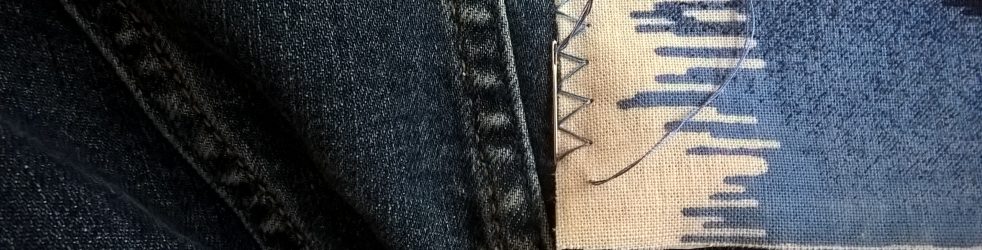
As you can see, I layered on my applique pieces after I blanket stitched the edge. This is so I knew it would fit into the space.  I attached the applique with a hand sewn Zig -Zag style stitch as the edge is quite fragile. In the photo on the right you can see the double running stitch down the spine of the needlecase.

I decided to attach a tail to the needlecase, I used a bit of retro crochet yarn I bought in a charity shop. I wove the yarn through the straight stitch down both sides, leaving a long end which I twisted up and anchored so the twist won’t undo itself. You can see in the photo below I used a single piece of yarn and finished it with a  bead at the bottom.

WP_20160615_12_50_53_Pro

That’s it!


Save

Save

Hand Sewing · Upcycling

Giving Low Tech a High Tech Life

Considering that I have a small business that concentrates on hand sewing and keeping handed-down skills popular, I have a spent a lot of time in front of the computer lately.

I can confirm after about a month of wrangling with the computer I am now blogged up, twittered up, instagrammed up, facebooked up and fed up!  Well actually I am pleased that I managed to have some success, my latest YES! moment was linking my instagram to my twitter and facebook page after spending hours going round in circles!

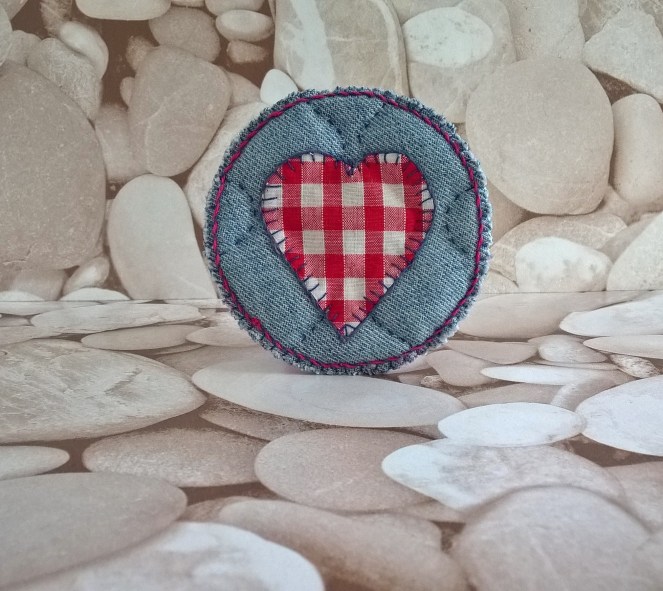
Oh! well onwards and upwards. Now I can get my needle and thread back out. I  decided this week to make myself a little denim quilted coaster for my cups of tea to rest on. Also, I’ve been having a little experiment with backgrounds for product photos, I’ve been to the local DIY store and picked up some free samples of wallpaper, made a little box out of foam hardback then I just used bulldog clips to hold the sheets in place.

WP_20160218_10_02_11_Pro

Hand Sewing · Upcycling

The Heart of No Waste.

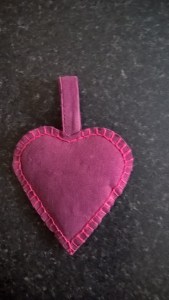
At the moment I am pretty obsessed with making anything heart shaped. Perhaps it’s the drabness of January and now that Christmas is well and truly gone the heart is a comforting shape and always full of good meaning.

As some of you have been reading on twitter, about 2 weeks ago I tweeted uh-oh my husband will be missing his jeans. So here is what I did with them, by the way they did have a few rips through them – I am not just commandeering his good clothes for my business start up projects!

I started off opening the seams on the inside of the legs,  cut up  one side of the zip to preserve it, cut up the back seam and through the waistband, then opened them flat. The quilted fabric I found locally at a charity shop.

The quilted fabric makes ideal stuffing for the decorations I have been making and means I am using something that is recycled on the inside as well as the fabrics. I was inspired by Jen Gale  @makeandmendyear to keep the ribbons off of my crackers from Christmas they are just the right length for decorations. I even had the gold ribbons from the in-laws crackers for a different look!

I went for a couple of different looks, on the gingham hearts I used blanket stitch round the edge. The ones with the gold ribbon have chain stitch and I used a scissor edge to rough up the outside edge. I decided to keep the different shading from where I had unpicked one of the back pockets and the beads are from broken earrings.

I had a bit of non-heart inspiration and decided to knock up a small pillow with the classic Scotty Dog outline stitched on to it. My husband is a bit of an artist so he drew me the shape on paper and I glued the shape to the back of a cereal box and cut it out to use as a template. The PU snakeskin is a pretty funky upholstery sample  I found in a charity shop.

My next challenge and altogether not as creative is to get myself a pinterest button attached to my pages so I put a couple of my images on my boards!

Hand Sewing · Upcycling

Rags to Riches

In my personal, and I know, small bid to help stop the world drowning in landfill rubbish, here is the first step on my blog to show people how they can use things they might think are only good for the bin.

Phototastic-03_11_2015_7f0843b5-9c13-4700-ad57-e5944efcef67I made this heart decoration out of waste pieces of fabric left over from a pair of trousers that I altered for a friend of mine.

All of the pieces I had already in my craft box, from bits of broken jewellery and spare buttons, to some left over wadding from my trials with quilting.

Saving odd buttons and beads in a plastic box is a great way to have a little collection of decorative items that you can attach to anything you make, or items that you might want to customise.

The “how to” guide.
Phototastic-27_10_2015_6dac11b3-b021-466c-a1b1-d1d5bb178425Phototastic-27_10_2015_4402f5fa-f8ad-4095-abdf-545d76444326   Phototastic-27_10_2015_74dd2693-df57-4ced-b74f-7d4e2e4b711d

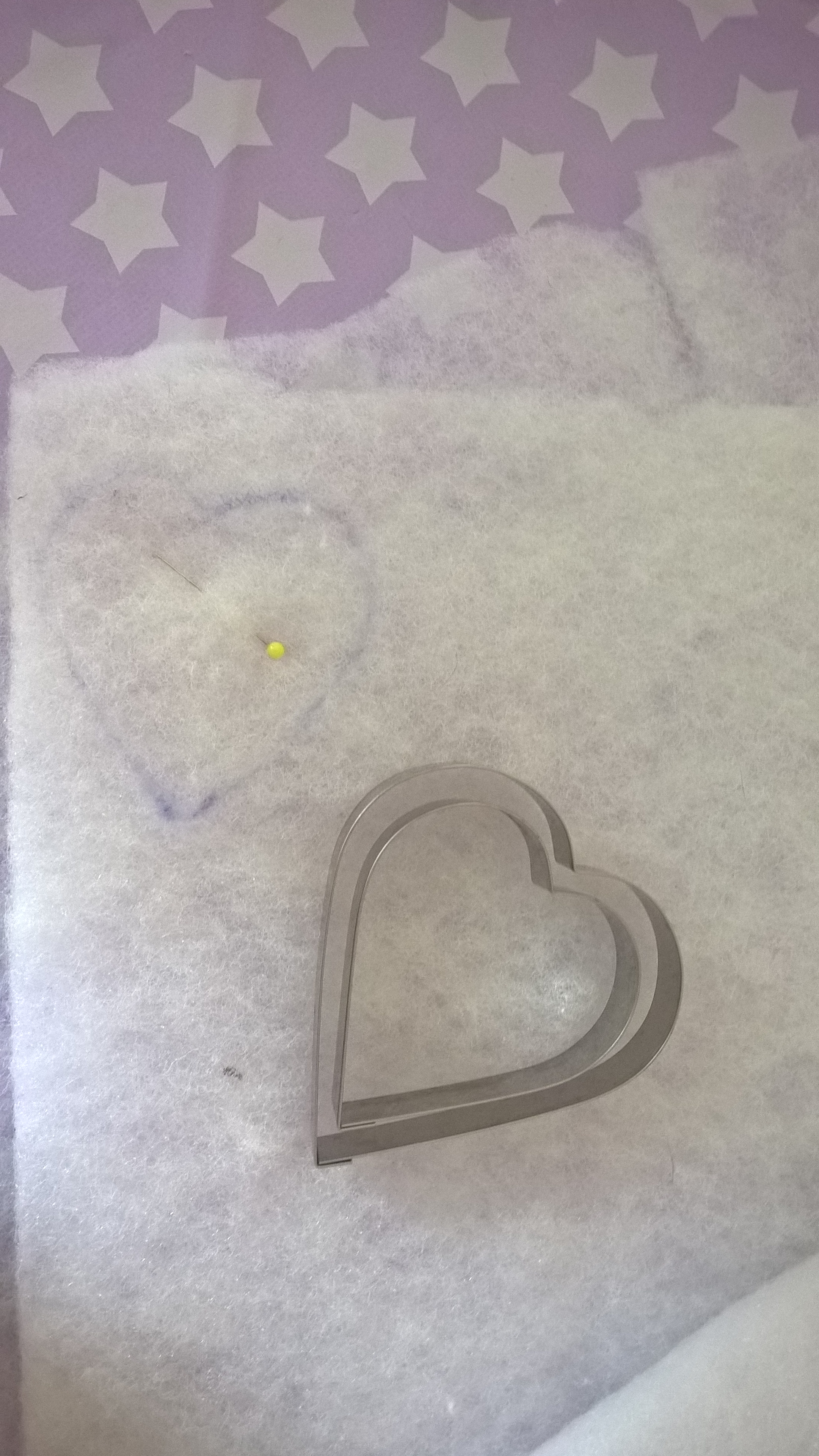
First, I cut the fabric open so that I was able to lay it flat. Next I used a cookie cutter to get the shape,this is a great way to make sure your shape is symmetrical. I placed the hearts as shown in the 3rd picture to minimise the amount of waste generated and to save the other piece for something else to make.

WP_20151027_11_22_48_ProHere, what I have shown is that I used the slightly smaller cookie cutter as a template for the wadding to go inside of the heart. The wadding is three layers thick.
Phototastic-03_11_2015_4b16c345-f87a-4aa8-b43f-019a4f62d6b3

I used the old hem edge of the jeans to make the loop for hanging, if you cut it close to the stitching the raw edge doesn’t fray.

The length I decided on was 12cm.

When deciding on length, you need to think about where you want to hang the item and the fact that about 1cm will be tucked into the decoration at either end of the loop.

You could also use ribbon and alternatives to wadding could be old tights with fabric inside such as t-shirt jersey because it is soft and flexible.

Phototastic-03_11_2015_2e9026ec-b5eb-4021-91e4-a72677f73c91The next steps are to fold the length for the loop in half, lift up a layer of the wadding, place the loop inside with 1cm in to stitch down, making sure you stitch through all of the layers. Sew a couple of straight stitches and sew over the stitches twice to add some strength.

Place one of the fabric hearts on your work surface with the right side (i.e the side that will be on the outside of the finished piece) of the fabric facing the table, put the wadding with the loop onto the the fabric and place it in the middle.

Place the 2nd heart on top of the wadding with the right side facing you, pin into place, making sure that the loop is in the centre of the indent of the heart.

Now you are ready to stitch your heart together and decorate it.
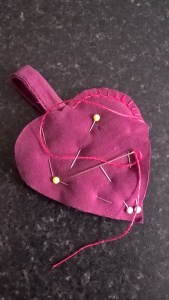
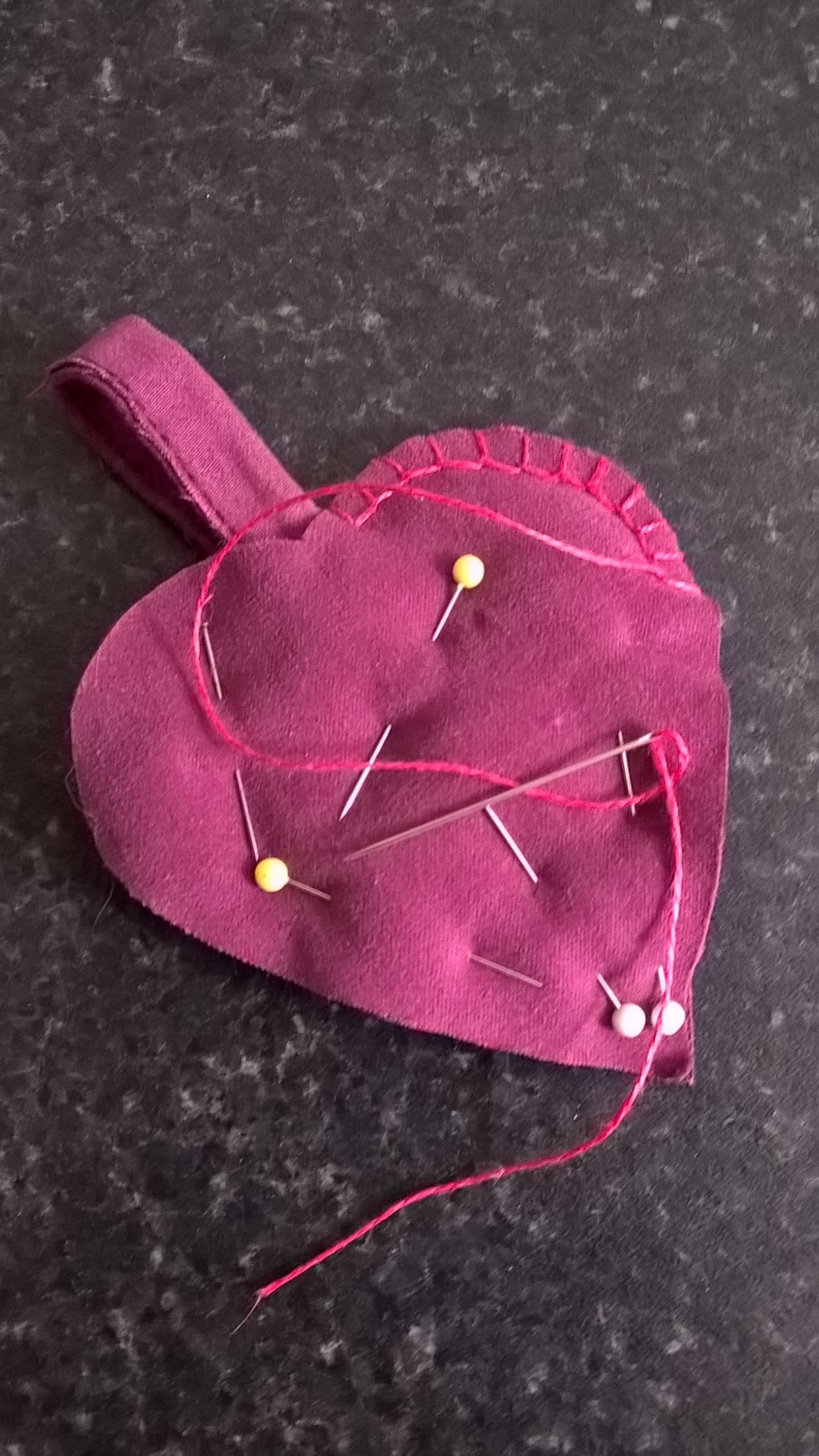
WP_20151102_10_32_10_ProWP_20151103_13_06_55_ProI have used Blanket Stitch to sew round the raw edge as it is both decorative and stops the edge from fraying.

Where the loop meets the top of the heart I used double running stitch, you will see in the finished picture that I hid this with bow at the top.

Eventually I plan to build a stitch library as part of my blog that will link to the italic writing, but for now  how to do these stitches can be found on the internet.

Come and visit me on a regular basis and I will see what other goodies I can cook up from odd bits of fabric, if you want to comment then put a link to your blog if you have any great bits of recycling involving fabric as well and I will come and visit  you!


Hand Sewing · Upcycling

The start of something …….

This first post is a nod to the past and a look ahead to the future.

I have always been interested in sewing and design, as a child I always remember loving Zandra Rhodes – a whirlwind of creativity dressed in bright pink! I learnt to sew from an early age, studied textiles at school and did 4 years of fashion design.

Later I fell into retail and have been there ever since.

However, my interest in making things has remained strong and due to my parents make do and mend attitude, recycling and reuse of items has always been at the forefront of things I have made at home.

This year me and husband were lucky enough to to get into Glastonbury Festival. I was heavily influenced by their green futures area, which is all about handcrafts and teaching people how to be greener. Later I went to Kirstie Allsops’ handmade fair, where there were lots of making sessions.

Next year I plan to set up a sewing school and have some travelling classes as well, to teach people in a fun way how they can reuse items that cannot be given to charity to be resold, e.g the fabric is in good condition but there is a hole in it or a stain on the front.

My ultimate plan is to teach short fun sessions at festivals and fairs and give people skills they can take home.

I hope to use my blog to get people to realise that embracing traditional skills doesn’t mean rejecting technology and new skills.